



























































Sea Turtle Volunteer
 Activities
 Waste Reduction
 Animal
 Green Sea Turtle
 Marine Life
 Leatherback Turtle
 Americas
 Central America
 Costa Rica
 Plastic Reduction
 Hotspots
 Hawksbill Turtle
 Vegan
Vegan
 Sloth Sanctuary
 Olive Ridley Turtle
 Scouts
 Ocean Cleaning
 Beach Cleaning
 Asia
Asia
 Loggerhead Turtle
Two-toed Sloth
Loggerhead Turtle
Two-toed Sloth
 Environment
Three-toed Sloth
Environment
Three-toed Sloth
 Southern Asia
 Sri Lanka
 Coral Reef
 Diving
 Marine Conservation
 Wildlife Conservation
 Premium
 Africa
 Yoga
Yoga
 Southern Europe
 Europe
 Greece
 Kefalonia
 Diving certificate
 Shark Conservation
 Eastern Africa
 Limon
Limon
 Nosy Komba
 Madagascar
 Flatback Turtle
 Families with small kids
 Surfing
 Oceania
 Queensland
 Australia and New Zealand
 Australia
 Cairns
 Great Barrier Reef
Kemps Ridley Turtle
Great Barrier Reef
Kemps Ridley Turtle
 Whale Conservation
 Ray Conservation
 South East Asia
 Snorkeling
 Manta Ray
 Western Africa
 Ghana
Ghana
 Indonesia
 Bali
Bali
 Humpback Whale
 Grey Reef Shark
 Whitetip Reef Shark
 Hammerhead Shark
Dwarf Sperm Whale
Hammerhead Shark
Dwarf Sperm Whale
 Monkey Conservation
 Galapagos
 Conservation Work
 South America
 Voluntourism
 Volunteer and Travel
 Thailand
 National Park
 Ecuador
 Bird Conservation
 Volleyball
 Jaguar Conservation
 Spanish Courses
 Language Course
 Zanzibar
 Tanzania
 Spider Monkey
 Intern Abroad
 Manatee Conservation
 Nursing Internship
 Machu Picchu
Manatee
Turtle Conservation in Asia
Machu Picchu
Manatee
Turtle Conservation in Asia
 Animal Shelter
 Dog
Dog
 Capuchin Monkey
 PADI Divemaster
 Toucan
 Dolphin Conservation
Eagle Ray
Dolphin Conservation
Eagle Ray
 Western Asia
 Turkey
Pantanal Jaguar
Turkey
Pantanal Jaguar
 Whale Shark
 Howler Monkeys
 Amazon Rainforest
 Belize
 Brazil
 Reptile Conservation
 Parrot
 Reforestation
 Southern Africa
 South Africa
 Ragged Tooth Shark
Iguana
Ragged Tooth Shark
Iguana
 Bottlenose Dolphin
Peruvian Jaguar
Devil Ray
Epaulette Shark
Bottlenose Dolphin
Peruvian Jaguar
Devil Ray
Epaulette Shark
 Raja Ampat
 Sperm Whale
Humpback Dolphin
Mexican Jaguar
Sperm Whale
Humpback Dolphin
Mexican Jaguar
 Spain
Spain
 Tenerife
 Maldives
 Mexico
 Oaxaca
 Mangrove
Plant Conservation
Spinner Dolphin
Mangrove
Plant Conservation
Spinner Dolphin
 Mozambique
 Natural Horsemanship
Horse
Natural Horsemanship
Horse
 Leopard Shark
 Italy
Italy
 Blacktip Reef Shark
 Nicaragua
 Malaysia
 Crete
Crete
 Crocodile
 Macaw
Macaw
 Tortoise Conservation
 Giant Tortoise
 Seychelles
 Bear Conservation
 Insect Conservation
 Butterfly Conservation
Dugong
Butterfly Conservation
Dugong
 Cambodia
Finless Porpoise
Irrawaddy Dolphin
Cambodia
Finless Porpoise
Irrawaddy Dolphin
 Planting Trees
 Leopardus Conservation
 Tapir Conservation
Tapir
Tapir Conservation
Tapir
 Tamarin
 Sloth Bear
 Ocelot
 Guatemala
 Ecological Farming
 Peru
Peru
 San Jose
 Veterinary Training
 Cats
Atlantic Spotted Dolphin
Kinkajou
Cats
Atlantic Spotted Dolphin
Kinkajou
 Otter Conservation
North American River Otter
Otter Conservation
North American River Otter
 Caiman
 Common Dolphin
 Melanesia
 Fiji
Fiji
 Safari
Blue Whale
Safari
Blue Whale
 Lombok
 Hiking
 Gambia
 Indigenous cultures
 China
China
 Cape Verde
 Eastern Asia
 Rio de Janeiro
 Panama


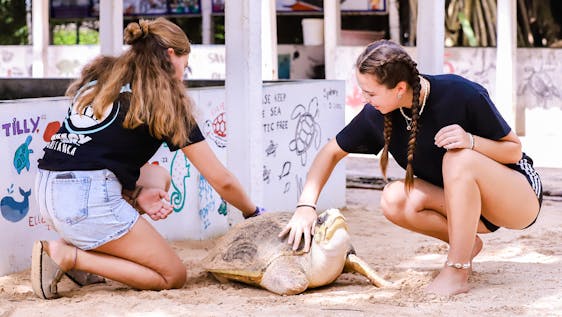



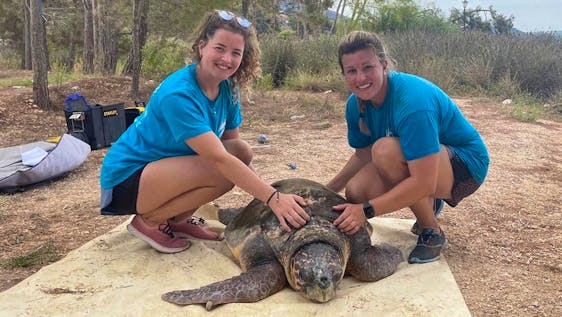










Saving Sea Turtles
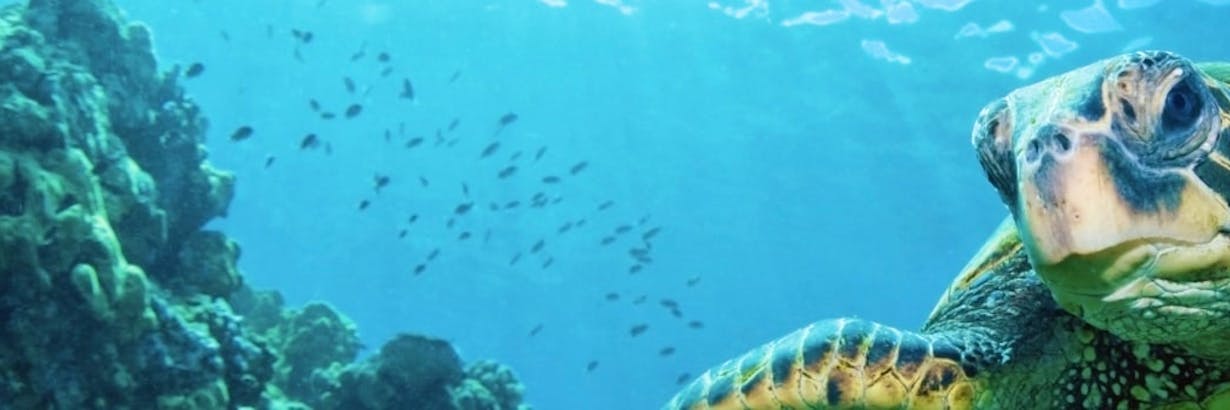
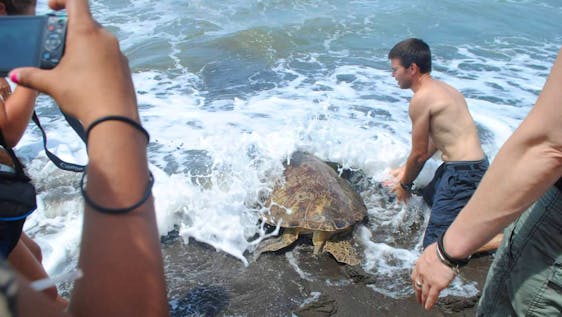
Imagine this: It’s dawn. You’re walking barefoot along an empty beach, waves whispering beside you. Tiny hatchlings are fighting their way to the ocean — and you’re there to help keep them safe. That’s exactly what you’ll experience in a sea turtle volunteer project.
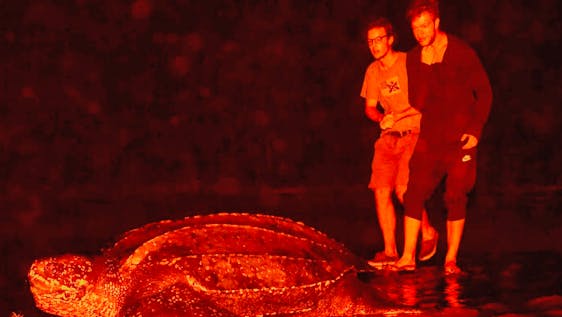
🌙 And on other nights: You walk over warm sand under a low moon. Suddenly you spot tracks — like a small tractor left them behind. At the end: a shallow pit and an ancient mother carefully covering her eggs. You kneel, mark the nest, log the data — and help ensure that in a few weeks 100 tiny lives reach the sea. That’s sea turtle conservation in practice — from Greece to Costa Rica.
⚡ TL;DR — What you’ll find in this guide
- Status & ecology: Why turtles are keystone species for reefs, seagrass & beaches — and what matters in 2026.
- Species & behavior: The 7 species, migration, arribadas, temperature-dependent sex determination.
- Hands-on fieldwork: Night patrols, hatcheries, community workshops, data workflows — with tools like loggers, photo-ID, eDNA and drones.
- Where to go: Clear hub comparison (Costa Rica, Asia, Bali, Fiji, Greece, Sri Lanka) matching season, tasks & budget.
- Prep made simple: Timeline from 12 weeks out to arrival, packing highlights, practical pro tips.
- Who can join: First-timers, students, working professionals, 50+, limited mobility — roles for everyone.
Flying from the US? Check passport validity (often 6+ months), consider travel health + evacuation coverage, and peek common routes (e.g., MIA→SJO for Costa Rica; LAX→NAN for Fiji; JFK→ATH for Greece).
⚡ Key facts at a glance
| Category | At a glance |
|---|---|
| 🐢 Species | 7 worldwide, all threatened — incl. Green, Loggerhead & Hawksbill, Leatherback |
| 🌍 Hotspots | Sea turtle projects in Costa Rica, Sea turtle projects in Sri Lanka, Sea turtle projects in Bali, Sea turtle projects in Greece (May–Sep), Sea turtle projects in Fiji · Turtle conservation worldwide · Marine life projects |
| 🛠️ Tasks | Night patrols, hatcheries, outreach, data logging, beach cleanups |
| 📊 Status 2026 | All species on the IUCN Red List (risk varies by population); key pressures: bycatch, artificial light, plastic & climate — typical countermeasures in Greece (light audits), Sri Lanka (community), Costa Rica (patrols). |
| 💰 Costs | Avg. $430–650/week incl. housing & support — examples: Bali, Sri Lanka. |
| 👩🎓 Who can join? | High-schoolers (with consent), students, professionals, 50+ — no prior experience required |
📊 Conservation status of sea turtles in 2026
All seven sea turtle species are on the IUCN Red List. Particularly critical: the Hawksbill and Kemp’s ridley; others vary by population from vulnerable to endangered. Estimates on bycatch vary by region and method, but fisheries bycatch, light pollution, tourism pressure, plastic, and warming sands (skewing sex ratios) are the main drivers.
Bottom line: Effective protection in 2026 means secure habitats + collect quality data + engage local communities.
🌿 How turtles protect entire coasts
- 🌊 Seagrass gardeners: Green turtles crop seagrass — supports blue-carbon sinks, nursery grounds, and buffers erosion. Great to observe in Fiji (reef-near) and Bali (coastal bays).
- 🐠 Reef health: Hawksbills regulate sponges; turtles stabilize food webs — vital for corals & fish, e.g., around Sri Lanka’s reefs.
- 🏝️ Dune fertilizer: Unhatched eggs & shells feed dune plants. More roots = stronger beaches against storms & erosion.
Fewer turtles → less seagrass, weaker dunes, more vulnerable coasts — impacting fisheries and tourism. Related projects: Mangrove & seagrass protection · Coral reef projects
⚠️ Why sea turtles need protection
Human-driven threats dominate: mass tourism destroys nesting habitat, light pollution disorients hatchlings, plastic is ingested. Just +3–4°F (~+2°C) in sand can swing sex ratios heavily toward females.
- 🎣 Bycatch & ghost nets (missing Turtle-Excluder Devices, unregulated gear)
- 🏗️ Coastal development, beach vehicles, unmanaged tourism
- 💡 Light pollution (hotels, streets, boardwalks)
- 🛍️ Plastic & trash (jellyfish confusion, internal injuries) → Beach cleanups · Ocean cleanups · Plastic reduction
- 🌪️ Climate (warming, extreme weather, beach loss)
- 🛢️ Oil spills, chemical loads
- ⚖️ Illegal trade (meat, eggs, shell/jewelry)
High-leverage actions in good programs: light audits, visitor management, nest protection/hatcheries, data work (Asia programs), fisher partnerships (TEDs), advocacy. Your role: standardized observing, documenting, educating — every shift and every dataset counts.
🐢 The 7 sea turtle species — quick guide
- Green sea turtle — common in Fiji & Bali
- Loggerhead — focus in Greece
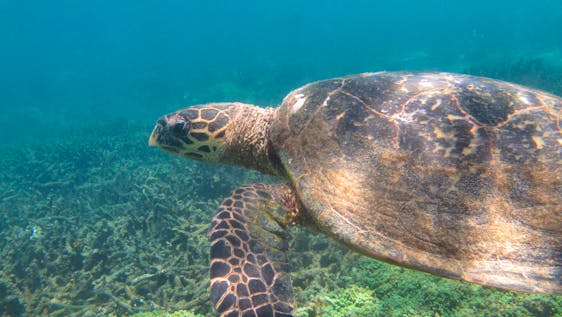
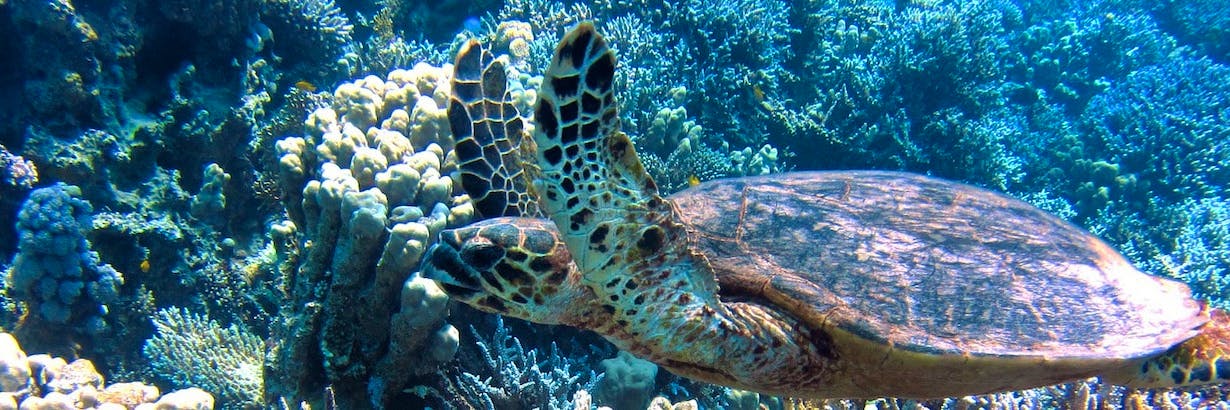
- Hawksbill — Sri Lanka & Bali
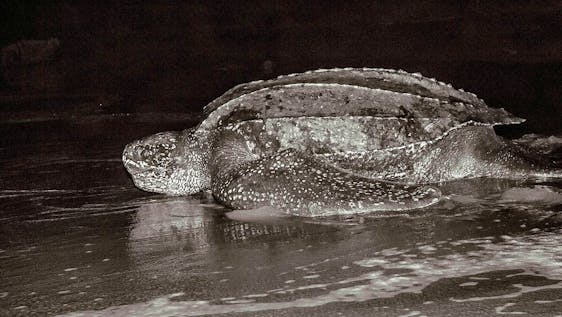
- Leatherback — Costa Rica
- Olive ridley — Costa Rica (arribadas) & Sri Lanka
- Kemp’s ridley — highly limited (info: Costa Rica)
- Flatback — no volunteer hubs currently
| Species | Range | Diet | Highlights |
|---|---|---|---|
| Leatherback | Global, incl. cooler waters | Jellyfish | Largest (up to ~6.5 ft / 2 m), soft leathery carapace |
| Loggerhead | Warm/temperate waters (incl. Mediterranean) | Crabs, snails, jellyfish | Powerful jaws; common in the Med |
| Green | Tropical coasts & bays (Caribbean, Indo-Pacific) | Seagrass (as adults) | “Lawnmowers” of seagrass (blue carbon) |
| Hawksbill | Tropical, especially coral reefs | Sponges | Historically hunted for shell; highly endangered |
| Olive ridley | Tropical Indo-Pacific/Atlantic | Omnivorous | Mass nestings (“arribadas”) |
| Kemp’s ridley | Gulf of Mexico / Caribbean | Crabs, clams | Rarest; few tightly protected nesting beaches |
| Flatback | N Australia, Papua New Guinea | Algae, mollusks | Small range; very disturbance-sensitive |
🗺️ Nesting & migration: What you’ll see at night
- Natal homing: Females return to their birth beach. Tagging & GPS reveal trends over years.
- Arribadas: Mass nestings (mostly Olive ridleys) — spectacular and logistically intense. High activity in Costa Rica.
- Sex determination: Sand temperature shapes the sex of hatchlings. Temperature loggers are gold for management plans.
- Migration: Thousands of miles between feeding & nesting. Satellite tags identify at-sea protection hotspots (trainings in Asia hubs).
🧭 Species ↔ volunteer hotspots: Match your favorite species
Want to support a specific species? This overview links the 7 sea turtle species to our key hubs, common tasks, and seasons.
| Species | Hubs/Regions | Best season | Typical tasks | Notes |
|---|---|---|---|---|
| Green | 🇨🇷 Costa Rica: see projects & seasons · 🇱🇰 Sri Lanka: education & community · 🇮🇩 Bali: family-friendly · 🇫🇯 Fiji: reef-near · 🌏 Asia: region overview | Feb–Nov (varies by coast) | Night patrols, hatcheries, seagrass monitoring | Seagrass “lawnmowers” — key for coastal resilience |
| Loggerhead | 🇬🇷 Greece: short-haul Europe, tourism focus · 🌏 Asia: mixed projects | May–Sep (Mediterranean) | Nest marking, light audits, visitor education | Emphasis on awareness & protection in the Med |
| Hawksbill | 🇱🇰 Sri Lanka: strong education work · 🇫🇯 Fiji: reef-near · 🇮🇩 Bali: hatchery & photo-ID | Mar–Nov (Indo-Pacific) | Hatcheries, photo-ID, reef-adjacent surveys | Highly endangered; strict ethics |
| Olive ridley | 🇨🇷 Costa Rica: arribada hotspots · 🇱🇰 Sri Lanka: east & southwest coasts | Jul–Dec (E Pacific arribadas) | Document mass nestings, manage visitors | Arribadas: intense night shifts, high team throughput |
| Leatherback | 🇨🇷 Costa Rica: leatherback season | Feb–Jul (regional) | Observation, temperature/data logging | Very sensitive; volunteers typically don’t handle |
| Kemp’s ridley | — | — | — | Rarest (mainly Gulf of Mexico); very limited projects |
| Flatback | — | — | — | Northern Australia/Papua; no volunteer hubs currently |
Tip: If species matters more than country, pick a hub with high sighting likelihood. Example: Sri Lanka for Hawksbills or Greece for Loggerheads. More options: Asia · Costa Rica · Bali · Fiji · Sri Lanka.
🧪 Field methods & tools: How you’ll work with data
Projects combine classic fieldwork with modern tech. Many tools are designed so that first-timers can contribute meaningfully after a short briefing — guided by biologists. Here’s what you’ll use, how you’ll use it, and where you create the most impact.
| Method/Tool | Purpose | Volunteer tasks | Equipment | Skill level | Avoid these errors |
|---|---|---|---|---|---|
| Nest temperature logger | Measure temperature curves (influences sex ratios) | Place logger, record GPS, extract & back up data (common in Sri Lanka) | Digital logger, GPS, gloves | Beginner+ | Sterile handling; correct depth/orientation; double backup |
| Tagging (PIT/flipper) | Identify individuals; track returns & migrations | Assist trained staff; forms; photos | PIT reader, sterile tags, pliers, camera | Intermediate (supervised) | Only trained staff tags; strict ethics & hygiene |
| Satellite telemetry | Map migrations & at-sea hotspots | Prep, weighing/measuring (staff-led), launch protocol | Satellite tag, epoxy, tape, scale | Intermediate (supervised) | Minimally invasive; approvals required; experts only |
| Photo-ID (carapace patterns) | Re-identification, growth/health records | Standardized photos (top/side), maintain metadata — often Bali & Fiji | Camera/smartphone, reference slate, cloud access | Beginner | Consistent distance/angle, no flash, calm movement |
| Drone surveys | Map nesting beaches, detect disturbance, beach profiles | Battery check, fly planned transects, upload | Drone, controller, SD cards | Experience (briefing) | Local rules; no overflight of animals; respect no-fly zones |
| eDNA sampling | Species detection via environmental DNA | Sterile sampling, filtering, labels, cold chain | Bottles, filters, cooler | Beginner (guided) | Avoid contamination (gloves, clean tools) |
| Light-pollution audit | Cut hatchling misorientation | Map light sources, record spectrum/intensity — high leverage in Greece | LUX meter/app, maps, checklists | Beginner | Fixed times; note weather; consistent method |
| Microplastic transects | Quantify loads & track trends | Collect along transects, sieve, weigh, document | Sieves, bags, gloves, scale | Beginner | Avoid contamination; constant transect length |
Related projects: Marine conservation · Whales & dolphins · Shark conservation · Mantas & rays
Mini-story: “On my first night patrol in Sri Lanka we placed a temperature logger — two months later the curve explained why nests clustered there. Data turned into insight.” — Jana, 21, volunteer
🗺️ Where do you fit best? — Hub comparison
Every location has its strengths. This table puts species, season, tasks & requirements side by side — so you can match your skills, budget, and timing.
| Hub | Main species | Best season | Typical tasks | Best for | Highlights | Hub page |
|---|---|---|---|---|---|---|
| 🇨🇷 Costa Rica | Green, Loggerhead, Leatherback, Olive ridley | Feb–Nov (varies by coast) | Night patrols, nest protection & arribadas, hatchery, community workshops | Beginners → advanced | High density of nesting beaches; strong community work | Arribada season & projects in Costa Rica |
| 🌏 Asia (regions) | Green, Hawksbill/Loggerhead, Olive ridley | Year-round with peaks | Patrols, hatcheries, visitor education | Beginners → advanced | Wide method mix; big cultural learnings | All sea turtle programs in Asia |
| 🇮🇩 Bali | Green, Hawksbill/Loggerhead, Olive ridley | Mar–Nov | Hatchery, releases, cleanups, data management | Beginners · families · 50+ | Good infrastructure; culture; easy logistics | Bali projects: schedule & costs |
| 🇫🇯 Fiji | Green, Hawksbill | May–Oct | Community engagement, monitoring, reef tie-ins | Beginners · divers | Island life; near-reef work | Fiji programs & reef proximity |
| 🇬🇷 Greece | Loggerhead (Caretta caretta) | May–Sep | Visitor management, light audits, nest protection, data | Beginners · students | Short flights within Europe; tourism-focused awareness | See projects in Greece (May–Sep) |
| 🇱🇰 Sri Lanka | Green, Hawksbill/Loggerhead, Olive ridley | Nov–Apr (S/W), May–Sep (East) | Hatchery, night patrols, releases, school projects | Beginners · educators/communications | Strong education focus; low cost of living | Sri Lanka: community & training |
Quick by region: Latin America · Asia · Oceania · Europe
Or pick a country: Costa Rica · Greece · Sri Lanka · Indonesia · Fiji
Tip: Can’t decide? Try a split placement: e.g., 2 weeks in Greece (visitor engagement) + 2 weeks in Costa Rica (night patrols). You’ll learn two systems — and deliver double the value.
🗓️ Preparation: What to do when
Good planning saves money and nerves — and boosts your impact on site. Use this as a checklist (US-friendly: passports typically need 6+ months validity; consider travel health insurance with international evacuation).
- 8–12 weeks out: Secure your spot & requirements, travel medicine (vaccines), insurance, flights, e-learning “Field Data Basics.”
- 6 weeks out: Visa/entry, language basics (e.g., Spanish for Costa Rica → Spanish courses for volunteers), gear list, test data access.
- 4 weeks out: Finalize budget, fitness (endurance/core), pack light & low-plastic.
- 2 weeks out: Test pack, offline apps (maps, translator, currency, moon phase), emergency contacts.
- 1 week out: Double docs (cloud + USB), code of conduct, meet your buddy.
- Packing day: Red-light headlamp, gloves, zip bags, reef-safe sunscreen, loose long clothing, rain shell, water shoes, power bank.
- Arrival: Activate eSIM/SIM, safety text, local cash for transfer, water & snack.
- First 48 hours: Beach walk-through, data format check (time zone, GPS), shadow a night patrol.
Pro tip: Keep a personal field kit (headlamp, gloves, marker, zip bags, tape measure, notebook) handy — for spontaneous nest calls.
🤝 Who are turtle projects for? — Access & roles
From high-schoolers and students to working pros and 50+: there’s a role for every profile.
👩🎓 Ages 16–17 (with parental consent)
- Good fits: Greece (close & structured), Bali (family-friendly), some Asia hubs
- Roles: beach cleanups, visitor engagement, hatchery assist, data upload.
🎓 Students / gap year
- Good fits: All hubs; especially Costa Rica (field methods) & Sri Lanka (community & schools)
- Roles: night patrols, loggers, microplastic transects, community workshops; often thesis-friendly.
- More: Intern abroad · Global programs
👩💻 Working professionals (2–3 weeks)
- Good fits: Greece (short stays), Bali (infrastructure)
- Roles: data backlog, visitor education, light audits, weekend patrols; “impact sprints” (10 nights) work well.
- Tips: Short-term programs for adults
🧭 50+ / senior volunteers
- Good fits: Bali, Greece, Fiji
- Roles: hatchery QA, data maintenance, school workshops, community liaison.
♿ Limited mobility
- Good fits: Projects with hatchery proximity and stable walkways (inquire beforehand!).
- Roles: data processing, photo-documentation, visitor management, logistics.
- Alternative/off-season: Remote/virtual volunteering
🤿 No dive experience? No problem.
- Sea turtle projects are beach- and land-based. No diving required.
- If you want marine conservation + diving, also check marine conservation programs. More ideas: Diving & volunteering · Marine conservation in Indonesia · Great Barrier Reef · Raja Ampat.
Mini-story: “At 56 I wasn’t sure I’d keep up. In Greece I led light audits — two weeks later hotels installed red LEDs. I wasn’t the fastest on the beach, but I was perfect for conversations.” — Petra, 56
🕒 Shifts & operations — realistic and scalable
Structure beats luck: shift models cover nesting windows, avoid heat peaks, and keep your data consistent.
| Region | Morning | Afternoon | Night | Notes & matching hubs |
|---|---|---|---|---|
| Tropical Atlantic | 06:15–10:00 beach scans, logger checks | 3:45–6:45 pm hatchery, community | 10:30 pm–2:30 am / 2:30–6:30 am night patrol | Watch tides & arribada windows · Costa Rica |
| Indo-Pacific | 07:00–10:30 light-spot mapping, beach profile | 2:30–5:30 pm hatchery, data backlog | 9:30 pm–1:30 am / 1:30–5:30 am night patrol | Monsoon fallbacks · Sri Lanka · Bali |
| Mediterranean | 08:00–11:00 visitor management, nest marking | 5:00–8:00 pm light audits, awareness | 10:30 pm–1:00 am short patrols (seasonal) | Tourism focus · Greece |
| Pacific islands | 07:00–10:00 near-reef surveys, community | 3:30–6:00 pm hatchery, reports | 10:00 pm–2:00 am patrol (local variation) | Reef proximity & short distances · Fiji |
Mini-story: “At 03:12 in Costa Rica a fresh track: we marked the nest — two months later the logger showed cooling windows that balanced sex ratios.” — Laura, 24
🧱 Workstreams & roles — quality, clearly defined
| Workstream | Goal | Roles (Beginner/Experienced/Staff) | QA criteria | If errors → fix | Hub example |
|---|---|---|---|---|---|
| Night patrol | Find nests, minimize disturbance | Observer / Logger / Lead | Red light; ≤60 s pause at sightings; GPS ±16 ft (±5 m) | Form gaps → debrief + morning check | Costa Rica |
| Hatchery | Maximize hatch success | Sifting / Labeling / QA-lead | Sterile; depth ±0.4 in (±1 cm); 2-person label check | Sand too compact → loosen; monitor moisture | Bali |
| Light audit | Cut misorientation | Measurer / Mapper / Report lead | Fixed time (10 pm); consistent tool; comparison photos | Mixed methods → standardize to one | Greece |
| Microplastics | Track loads with trendable data | Sampler / Weigher / QA | Fixed transect length; constant sieve size | Contamination → change gloves/bags | Sri Lanka |
| Data/monitoring | Complete, auditable dataset | Uploader / QA / DB lead | Filename scheme; required fields; audit log | Duplicates → hash check | Asia |
| Community | Change behavior & win stakeholders | Speaker / Visuals / Workshop lead | 45-min plan; target group; feedback form | Too academic → storytelling & demo | Sri Lanka |
Mini-story: “Kids built red lamp covers. That same evening they guided their parents on the beach — local outreach works.” — Amir, 28
🧪 SOPs — Standard operating procedures
🦶 Night patrol — 8 steps
- Briefing & roles (Lead/Navigator/Logger/Observer)
- Gear check (red light, radio, GPS, gloves, water)
- Quiet transects; spacing; no flash
- Read tracks → species/status (nest/false crawl)
- Mark: landmark + GPS (±16 ft/±5 m), photo
- Complete form (time, tide, weather, disturbance)
- Return: control scan; pack out trash
- Debrief & double data backup
🥚 Hatchery — 7 steps
- Record nest → replicate at target depth
- Place temp logger sterilely
- Sand management (moisture/porosity)
- Clear ID (date/species/GPS)
- Secure protective mesh
- Protocol + photo docs → upload
- Release with visitor management & distance
💡 Light audit — 6 points
- Fixed time (10 pm; new moon ±2 days)
- One method (app or LUX meter)
- Record spectrum (white/amber/red)
- Comparison photos; fixed angle/position
- Map hotspots
- Prioritize action list
🧴 Microplastic transect — 6 points
- Fix transect (e.g., 328×16 ft / 100×5 m)
- Standardize sieve size (e.g., 1 mm)
- Label samples (date/ID/GPS)
- Weigh & separate by size class
- QA double count
- Upload with required fields
🧫 eDNA — 7 points
- Sterile setup; gloves
- Sample upstream of disturbance
- Standardize volume (e.g., 1 L)
- Filter; label inside/outside
- Keep cold (cooler)
- Chain-of-custody form
- Document transport
📸 Photo-ID — 6 points
- Top & side shots; fixed distance/angle
- No flash; calm moves
- Reference slate visible (scale/ID)
- Metadata (time/location/species) complete
- Filename scheme (YYYYMMDD_Species_ID_Location)
- Upload & QA checkbox
🧰 Data QA — 5 checks
- Completeness (no empty required fields)
- Consistency (GPS↔map; time↔shift)
- Duplicate check (hash/ID)
- Photo evidence (≥1 per event)
- Approval log (who/when/version) · Related roles: NGO support
🛟 Incident response — 6 steps
- Stop/assess: exclude danger
- Alert chain (Lead→Coordinator→Authorities)
- Document first aid
- Use evac route & rally point
- Report (facts/photos/coordinates)
- Debrief & lessons learned
🗣️ Community workshop — 45-min plan
- Define audience (hotel/school)
- Learning goal (red LEDs, distance, trash)
- 10’ story + demo (red light)
- 20’ group work (poster/LED covers)
- 10’ share-out & commitments
- 5’ feedback & follow-up · Materials: education projects · environmental education · conservation
🤝 Tourism conflicts — friendly → formal
- Use “I” statements + reason
- Offer alternatives (red light, distance)
- If refused, call staff
- Document: place/time/photo (no faces)
- Follow-up with hotel/community
🧯 Health & safety
| Risk | Early signal | Immediate action | Who |
|---|---|---|---|
| Heat stress/dehydration | Headache, dizziness | Shade, electrolytes, rest | Everyone · Lead monitors |
| Night traffic/paths | Uneven trails, vehicles | Reflectors, group walking, radio | Lead/Navigator |
| Surf/current | High waves, eroding edge | Stay on dry strandline; no water entry | Lead decides |
| Animals | Dogs/crabs, aggression | Distance, shielding, animal control if needed | Lead/Staff |
| Theft/egg poaching | Fresh tracks/people at night | Document; no confrontation; authorities | Lead/Coordination |
| Situation | Route/Rally point | Contact | Max response time |
|---|---|---|---|
| Medical (heat/injury) | Basecamp → clinic | First responder: on-site lead | 10–15 min |
| Conflict/assault | Patrol route → rally S1 | Coordinator + local police | ~15 min |
| Weather/flooding | High ground H2 | Lead + municipality | Varies |
📈 Data flow, QA & impact
| Step | Artifacts | QA | Output/audience |
|---|---|---|---|
| Capture | Form, GPS, photos, logger ID | Required fields; time/place check | Team cloud |
| Review | QA checklist; double entry | Error rate < 2% | DB import |
| Approval | Versioning; sign-off | Audit log | Authorities/partners |
| Report | Heatmaps; monthly report | Compare to last year; hotspots | Municipalities, hotels, fisheries |
Productive bad-weather alternatives: reforestation · mangrove protection · beach cleanups
🎓 Training & skill ladder
- Days 0–1: Safety/ethics briefing · data-format drills · shadowing
- Days 2–5: Own tasks (supervised) · QA review · micro-badges
- Week 2+: Role rotation · mini-project (audit/workshop/QA lead)
Micro-badges: “Patrol Rookie” (Costa Rica) → “Hatchery Assistant” (Bali) → “Data QA” (Asia) → “Community Lead” (Sri Lanka).
💶 Budget, cost levers & impact
| Item | 2 weeks | 4 weeks | 8 weeks | Levers |
|---|---|---|---|---|
| Program (incl. housing/support) | $950–1,400 | $1,900–2,600 | $3,400–5,200 | Longer stay → lower weekly rate |
| Flights | $400–1,300 | $400–1,300 | $400–1,300 | Shoulder seasons/early booking |
| Local costs (food/transport/SIM) | $170–320 | $340–640 | $680–1,280 | Eat local |
| Insurance/vaccines | $90–270 | $90–270 | $90–270 | Compare bundles |
| Total | $1,610–3,290 | $2,830–4,810 | $4,570–8,050 | Ask about CSR/scholarships; budget hubs: Sri Lanka, Bali |
| Metric | Range | Context |
|---|---|---|
| Nests recorded | 6–18 | Season/hub dependent |
| Lights in report | 3–10 | Audit & stakeholder talk |
| Data rows QA-checked | 120–400 | Photo-ID, loggers, events |
Impact per $ rises with longer stays & off-peak timing; community reports (LED retrofits) often deliver outsized effects. → Scholarships · Budget-friendly programs
🧳 Field kit pro
| Category | Items | Why | Weight/cost tip |
|---|---|---|---|
| Must | Red-light headlamp, gloves, zip bags, reef-safe sunscreen, long lightweight clothing, power bank | Animal welfare · hygiene · power | Borrow/share when possible |
| Nice | Knee pads, dry bag, waterproof notebook, zip ties, tape measure | Comfort & efficiency | Buy locally |
| Pro | LUX meter, GPS logger, small cooler (eDNA), reference slate | Data quality | Team sharing |
⛈️ Weather fallbacks
| Condition | Prioritized tasks | Postponed | Note |
|---|---|---|---|
| Heavy rain | Data backlog, QA, trainings (Asia hubs) | Outdoor photo-ID | Keep electronics dry |
| Strong surf | Light audit, community work | Near-water beach profiling | Safety margin from wash line |
| Heat > 93°F (~34°C) | Work dawn/dusk; siesta midday | Midday beach tasks | Electrolytes/shade points |
More productive alternatives: reforestation · mangrove protection · beach cleanups
♿ Inclusion & access
| Workstream | Adaptation | Example task |
|---|---|---|
| Hatchery | Workstation near access · stable paths | Read loggers; labeling |
| Data/monitoring | Remote uploads · QA from base | Metadata upkeep; duplicate checks |
| Community | Seated workshops · visual tools | Poster builds; mini-talks |
Mini-story: “After an accident I use crutches. In Bali I worked in the hatchery labeling eggs and running QA on data uploads. I couldn’t walk the night patrols — but my work still mattered every single day.” — Sam, 34
🏠 Accommodation, meals & logistics
| Area | Standard | Range/variance | Tips |
|---|---|---|---|
| Accommodation | Shared dorm (4–8) | Single rooms sometimes for a fee | Earplugs, sleep mask |
| Power/network | 230 V/110 V; occasional outages | Wi-Fi quality varies | Power bank; offline apps |
| Hygiene/water | Simple, clean | Cold water possible | Bring microfiber towels |
| Meals | 2–3 meals/day | Local/vegetarian usually easy | Pack snacks for night patrols |
| Transport | Pickup/public transit/briefing | Taxi/tricycle locally | Small bills; eSIM for maps |
Popular bases: Manuel Antonio (CR) · Puerto Viejo (CR) · Limón (CR) · Puerto Jiménez (CR) · Athens · Crete · Chania · Phuket · Ubud · Denpasar · Gili Islands
🌐 Stakeholder map
| Actor | Role | Your touchpoint |
|---|---|---|
| NGO/project team | Leadership, training, QA | Briefings, debriefs, QA review |
| Municipality/authorities | Rules, protection windows, reports | Monthly reports, meetings |
| Hotels/bars | Lighting, visitor flow | Audit report, LED retrofits |
| Fishers | TEDs, net practices | Dialogue, awareness |
🧩 Impact packages by volunteer profile
- Age 16–17 (2 weeks): Hatchery assist, cleanups, data upload → backlog −30%
- Gap year/Students (4–8 weeks): Night patrols, loggers, microplastics → season-long data series · Internships · Global programs
- Working adults (2–3 weeks): Light audits, reports → 1–2 hotel LED retrofits · Short-term programs
- 50+: QA lead, school workshops → data errors < 2% · 50+ volunteers
- Limited mobility: Data curation, photo-ID → structured DB growth · Remote/virtual volunteering
Mini-story: “I wasn’t the fastest on the beach, but my report template lived on — hotels switched to amber LEDs.” — Petra, 56
⚖️ Ethics: Do-no-harm — quick decision guide
- Adults/nesting females: no touching · >16 ft (>5 m) distance · staff leads
- Hatchlings: staff-led only in misorientation/danger
- New nest: mark & document → staff decides on relocation
- Conflicts: inform kindly → call staff → document → community/hotel follow-up
🧭 Which hub fits you?
Plan your time with turtles like a puzzle: How long can you stay? Which role fits you? How do you want to live? This mini-decision tree points you to a place you’ll love — and where you’ll be useful.
- Your time:
2–3 weeks → Focus on visitor engagement & light audits.
4–8 weeks → Deeper work with night patrols, hatchery & data series. - Your motivation:
Lots of interaction → Greece.
Arribadas & night action → Costa Rica.
Education & community → Sri Lanka.
Family-friendly + culture → Bali.
Reef-near island life → Fiji. - Budget & comfort:
Short flights (EU) → Greece.
Low-budget + culture → Sri Lanka.
Smooth logistics → Bali.
🧾 Checklists for a smooth start
Every good mission starts with good prep. These quick lists keep your pack light and your head clear.
🎒 Compact packing list — your field kit
- Red-light headlamp (no white beam)
- Light, long clothing (breathable)
- Reef-safe sunscreen & mosquito repellent
- Gloves, zip bags & waterproof marker
- Water shoes for wet beaches
- Power bank & cables
- Light rain shell & dry bag
- Waterproof notebook & pen
- Mini first-aid kit & electrolytes
🛫 Pre-departure (8–2 weeks out)
- Book your spot & check vaccinations
- Handle visa/entry requirements
- Get travel & liability insurance (→ Voluntourism & coverage)
- Book flight; confirm pickup/transfer
- Complete e-learning “Field Data Basics” (2 hrs)
🟢 Onboarding — first 24 hours
- Safety briefing & ethics workshop
- Buddy up & practice roles
- Beach walk with route & rally points
- Test data template (GPS, photo, notes)
- Shadow one experienced night patrol
🧪 How-to: Your first steps in the field
Here’s what the first days actually look like — simple, repeatable, effective.
🌙 First night patrol
Feel the beach lit only by stars and red light — a classic in Costa Rica.
- Assign roles (Lead, Logger, Observer, Navigator)
- Gear check: red light, GPS, gloves, water
- Quiet transect; keep distance from animals
- On sighting: read track, record species & status
- Mark nest & GPS; take evidence photo (no flash)
- Fill form (time, tide, weather, disturbances)
- Team debrief; double-save data
💡 Run a light audit
Cut misorientation with simple measurements — best practice from Greece.
- Set time (10 pm; new moon ±2 days)
- LUX reading & comparison photos
- Note spectrum (white, amber, red)
- Map each light source
- Draft action list (amber LEDs, shielding)
📤 Data upload & QA
Turn field notes into evidence that drives decisions — the workflow many Asia hubs use.
- Filename:
20250928_Caretta_Nest_Greece - Fill all metadata (time, GPS, species)
- Double-check; avoid duplicates
- Keep an approval log (who/when/version)
- Backup: cloud + encrypted USB
🛟 Troubleshooting & escalation
If something’s off, use this quick matrix — from heat stress to beach disturbances.
| Scenario | Signal | Immediate action | Escalation |
|---|---|---|---|
| Heat stress | Dizziness, headache | Rest, shade, electrolytes | Lead → first aider → clinic |
| Visitors too close | Flash, crowding near turtle | Explain kindly, offer red lights | Call staff; document incident |
| Strong surf | Wash line hits transect | Move route landward | Switch to data tasks |
Emergency chain: Stop & assess → alert lead → first aid → evacuation route → incident report.
📚 Glossary: Key terms
- Arribada
- Spectacular mass nesting of thousands of Olive ridley females.
- False crawl
- Landing without egg-laying — often due to disturbance.
- Hatchery
- Protected area for nests; controlled incubation.
- TED
- Turtle Excluder Device; reduces bycatch in trawl nets.
- Blue carbon
- Carbon stored in seagrass & mangroves — supported by healthy turtle populations.
❓ Frequently asked questions
What do you actually do on a night patrol?
You walk the beach, read tracks, mark new nests, set GPS (±16 ft / ±5 m), note weather/tide/disturbances, take a no-flash evidence photo, and double-save the data. You’ll also pack out trash and log minor disturbances. → See SOPs above.
Can I touch or move sea turtles?
No. Handling is for trained staff only and only in exceptions (misorientation, danger, authority orders). Your role: observe, document, inform visitors.
Do I need prior experience or dive certification?
No prior experience required — you’ll get structured training on site. Diving isn’t needed; projects are beach- and land-based. If you want diving too, see marine conservation programs.
Are night patrols safe?
Yes — buddy system, set routes/rally points, and radio/phone are standard. If surf or weather turns risky, patrols stop. First-aid kits and evacuation plans are in place. (→ Conservation in Greece · Conservation in Costa Rica)
What does it cost to volunteer with sea turtles?
Program fees (incl. housing/support), flights & transfers, local costs, and insurance/vaccines. Typical range: $430–650 per week depending on hub and season.
Any age limits?
Participation usually from 16–17 with parental consent. No upper limit — “50+ volunteers” are welcome (e.g., data curation, school workshops, QA leadership).
How accessible are turtle projects?
Some hubs offer lower-mobility roles (data work, photo-ID, hatchery tasks). Ask about path quality, ramps, and bathrooms in advance. Options: see Inclusion section and inclusion projects · remote volunteering.
Which hub is right for me?
Depends on duration, budget, and motivation: Greece (EU-near, visitor engagement), Costa Rica (arribadas & night patrols), Sri Lanka (community focus), Bali (family-friendly), Fiji (reef-near).
How does nest relocation work and when is it allowed?
Only if a nest is in immediate danger (erosion, flood line, construction) and only by trained staff. Your tasks: document risk, prep new location (depth/sand), label ID, protocol & photos — staff do the handling.
What are my hatchery tasks during hatching?
Daily mesh/predator checks, light sand loosening, read loggers, record hatch success, two-person label checks, manage visitors during releases. No handling unless staff-led in emergencies.
How to do photo-ID correctly?
Standard top and side shots without flash, fixed distance/angle, reference slate visible. Metadata: time, GPS, species, event, photographer. Filename: YYYYMMDD_Species_Event_Location_ID. Upload same day with QA ticked.
How do I document a “false crawl”?
Photograph track and turning point (no faces, no flash), set GPS (±16 ft / ±5 m), note sand/vegetation/obstacles and potential disturbances (light/people/dogs), add weather/tide, mark clearly as “false crawl.”
What tools work for GPS & offline uploads?
GPS device or phone with offline maps; standard form with required fields; photo folder with filename scheme; daily upload to project cloud; plus offline backup (encrypted USB). Always double backup and keep an approval log. (→ NGO management & processes)